

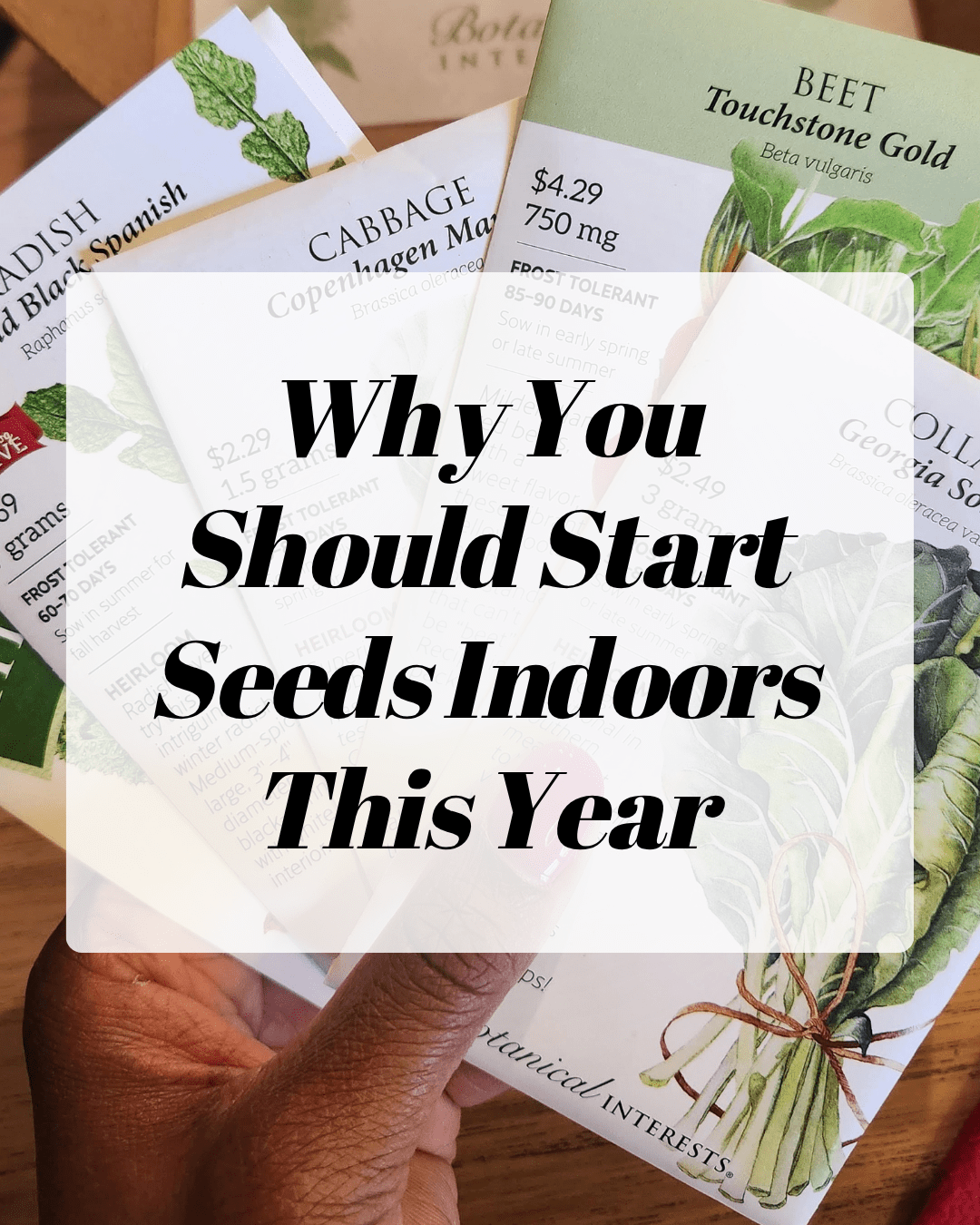
It took me about four years to start taking seed starting more seriously. If you’ve only ever bought starts from the garden center, seed starting can feel like an extra step you don’t need. In reality, it’s one of the biggest flexes you can make to your garden, and it’s a lot more approachable than it looks. Here’s why it’s worth the space on your windowsill:
1. Grow More Heirloom Varieties

Garden centers stock what sells well which usually includes a handful of tomato varieties and a few pepper types. When you start from seed, you have access to hundreds of heirloom and specialty varieties that never make it to a retail shelf. Try starting heirlooms such as San Marzano Roma Pole Tomato Seeds, Brandywine Red & Yellow Blend Pole Tomato Seeds, or Gourmet Blend Beet Seeds.
2. Saves Money

A single start at a nursery can cost as much as an entire packet of 20 to 30 seeds. If you’re planting a full vegetable garden every year, seed starting pays for itself fast, especially once you’ve got reusable starting trays instead of buying flimsy plastic ones every spring.
3. Head Start on the Growing Season
Forunately, Oklahoma’s growing season is relatively long (roughly 185 to 200 days in Northeast Oklahoma), so starting seeds indoors 6 to 8 weeks before your last frost date means your plants are already established and ready to produce by the time you’d otherwise just be planting. That’s especially valuable for slow-to-mature crops like tomatoes, peppers, and eggplant.
4. Stronger, Healthier Root Systems

Cheap, flimsy seed trays often let roots circle inside the cell, which stresses the plant once it’s transplanted. Trays with air-pruning features, like the Epic 6-Cell Seed Starting Trays use side slits that stop roots from circling and encourage a fuller, more branched root system. The Epic 1020 Universal Bottom Tray means no more top watering which can lead to mildew and rot. A stronger root at transplant time means less shock and faster establishment in the garden.
5. Easily Add More Natives
Seed starting isn’t just for vegetables. A lot of native plants, especially Purple Coneflowers, are far easier and cheaper to find as seed than as nursery starts. If you’re building out a native pollinator bed, starting from seed means you down have to track down native starters locally. Want to learn more about native plants? Check out this post on growing native plants.
Seed starting can be a bit of a learning curve, but once you’ve got a setup, it turns into one of the most satisfying parts of gardening watching something go from a seed to table.

Krystal Dunham is a gardener and award-winning registered dietitian nutritionist based in Tulsa. A former NCAA Division II soccer player for Southwestern Oklahoma State University (Go Dawgs!), Krystal’s journey in nutrition has been both dynamic and impactful. She earned her Master’s in Nutrition and Food Science from The University of Central Oklahoma while completing her Dietetic Internship. A Returned Peace Corps Volunteer, Krystal brings a global perspective to her practice.

Be the first to comment